Design notes, Uniforms
Kurta Uniforms for Indian Restaurants: Traditional Without Looking Like a Costume
An Indian restaurant that puts its team in generic kurtas from a wholesale market ends up looking like a themed banquet hall. The idea is right; the execution is what separates a designed uniform from a costume.
Start with the length
The single most common mistake is length. A traditional knee-length or below-knee kurta is beautiful standing still and impractical during service: it catches on chair backs, wraps around trays and gets stepped on when staff crouch to serve. Mid-thigh to upper-thigh, with side vents that reach the natural waist, keeps the silhouette and returns the mobility.
Fabric: the khadi-look compromise
Real khadi and handloom cotton have a texture nothing else replicates, and they crease within an hour of a service shift. Our usual recommendation is a khadi-look poly-cotton or a slub-textured blend: the visual character of handloom, the washability and crease-recovery of a uniform fabric. Save genuine handloom for the hostess, the manager and anyone who is mostly standing and greeting rather than carrying.
Collar and placket do the design work
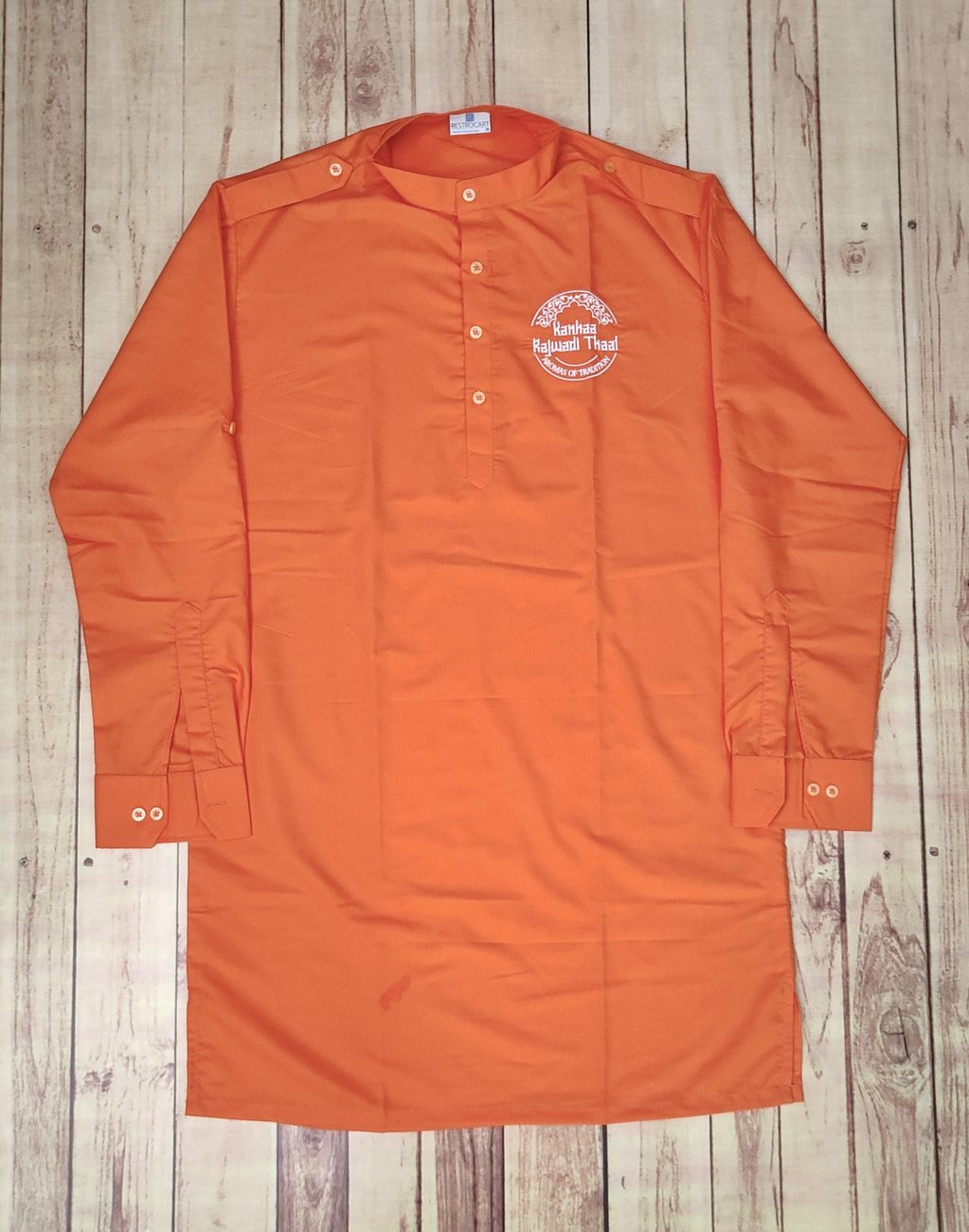
- Nehru or mandarin collar instead of a plain round neck. It instantly reads considered.
- Contrast placket or piping in a brand shade down the button line.
- Wooden, horn-look or fabric-knot buttons rather than plastic.
- A small embroidered crest at the chest, one or two thread colours.
- Side vents with a bar tack, which is what stops the vent tearing.
Colours that suit Indian dining rooms
Indian restaurants tend to run warm lighting, dark wood and rich textiles, so a uniform needs to sit against that rather than compete with it. Deep indigo, oxblood, mustard, olive, terracotta and undyed sand all work. Avoid pure white unless you have the laundry to support it, and avoid bright saturated primaries, which read as fancy dress under warm light.
The difference between traditional and costume is usually restraint. One collar detail, one accent colour, one crest. Not three.
Layering for roles
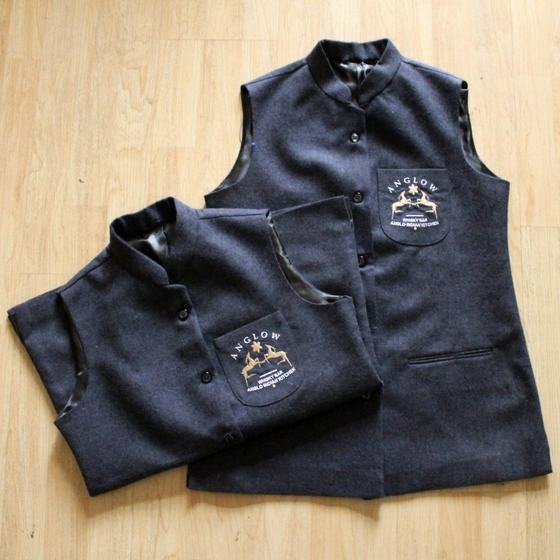
The kurta is a base layer that takes other pieces well. A waist apron in matching or contrast fabric for service staff. A Nehru jacket or waistcoat for managers and captains, in the same palette. An angavastram or stole for a hostess at the door. Because the base is common, the whole floor still reads as one team.
Practical notes
- Three per person, as with any daily uniform.
- Chest and length measurements rather than letter sizes; kurta fit varies more than shirt fit.
- Ladies fits as a separate block, with a longer hem and different side-vent placement.
- Embroidered, not printed. Prints crack on textured fabrics.
Ordering
Share your interiors and your palette and we will propose a kurta programme across service, hostess and manager roles. See our full uniform catalogue or WhatsApp +91 98213 34906.