Buying guide, Uniforms
Housekeeping Uniforms for Restaurants: Fabric, Fit and Colour-coding
Housekeeping uniforms are the ones restaurateurs think about last and replace first. They take the most washes, the harshest chemicals and the least budget, which is exactly why getting the specification right saves money rather than costing it.
The wash cycle is the design brief
A server's shirt might be washed four times a week. A housekeeping uniform is washed every single shift, often at high temperature with strong detergent, sometimes alongside kitchen linen. Design for that first. That means poly-cotton rather than pure cotton, colour-fast dyes, reinforced seams at the knee and pocket corners, and no delicate trims that will not survive a hot wash.
Fabric and weight
We build most housekeeping uniforms in 65:35 poly-cotton at 180 to 200 GSM. Heavy enough to be opaque and hold shape, light enough to work in through a Delhi summer, and quick to dry so a two-set rotation actually works. For hotel banquet housekeeping we go slightly heavier at 210 GSM for a more structured look on the floor.
Fits: stop ordering one cut for everyone
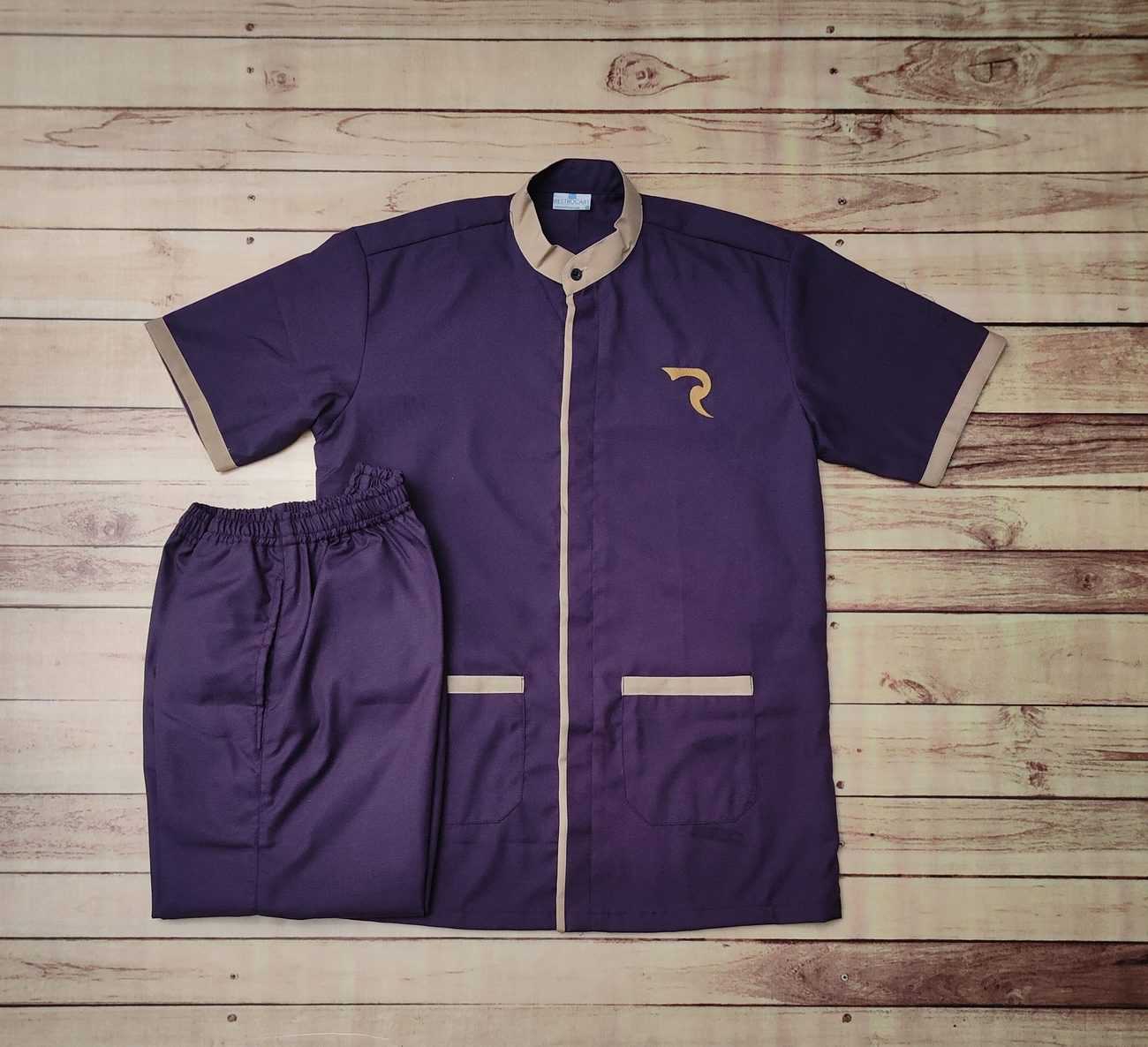
The most common complaint we hear about existing housekeeping uniforms is fit, and it is almost always because a single unisex cut was ordered for a mixed team. We make separate ladies and gents blocks: a ladies kurta-style top with side vents and a slightly longer hem is far more comfortable and better received than a shortened men's shirt. Where a team prefers it, we also make salwar-kameez and tunic-with-trouser sets in the same fabric and shade so the floor still looks uniform.
Colour-coding: make the room readable
Housekeeping should be instantly distinguishable from service staff without looking like a different company. The system we recommend keeps the same fabric and the same crest across all teams and changes only the colour:
- Service: charcoal or the primary brand shade
- Housekeeping: olive, slate or a deeper neutral
- Kitchen: white or black chef wear
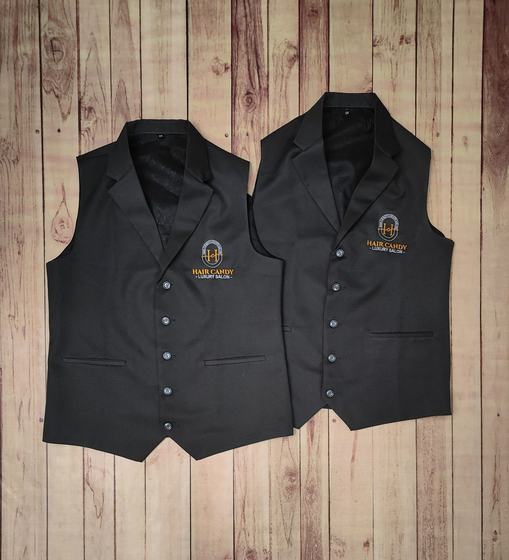
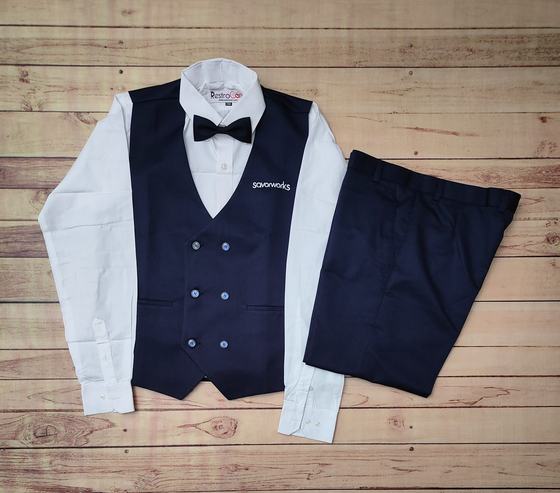
- Managers: the service colour plus a waistcoat
Guests read it in one visit. Managers can scan a room and see coverage at a glance. And when you reorder, you are buying one garment in several shades rather than four unrelated products.
A housekeeping uniform that fits well and does not show yesterday's spill changes how the person wearing it carries themselves on the floor. That is not a soft benefit; guests notice posture.
The utility apron
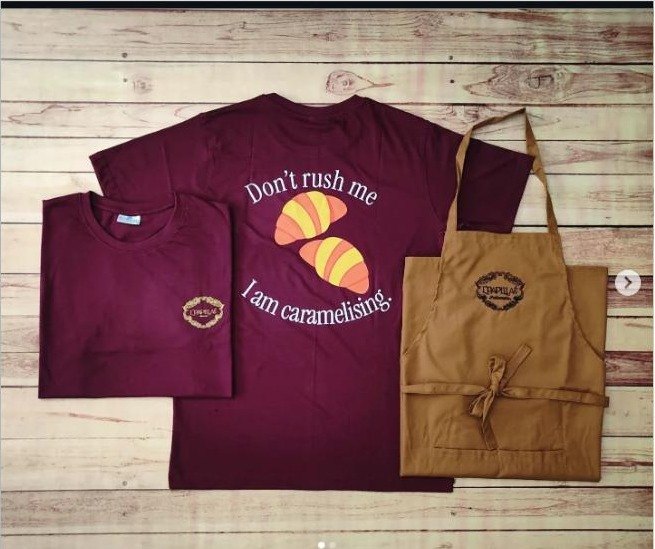
Add a mid-length utility apron in a wipe-clean or heavier canvas: two large front pockets, a cloth loop, and a waterproof option for teams handling dishwash and bin runs. It costs a fraction of the uniform, and it doubles the life of the garment underneath.
Small details worth specifying
- Reinforced pocket corners and knee seams, the two places housekeeping trousers fail.
- Embroidered crest rather than a print. Prints crack under repeated hot washing.
- Woven wash-care labels so laundry staff use the right cycle.
- Name badges for housekeeping too, not just service. It matters more than people expect.
- Spare stock of 15 to 20 percent in common sizes, because housekeeping teams turn over faster than any other department.
Ordering
Tell us your headcount, the ladies and gents split, and whether the team handles dishwash and bin runs. We will propose fabric, fit and a colour system that sits alongside your service and kitchen uniforms, then send mockups and a quote. WhatsApp +91 98213 34906.